作物光合作用合成生物学的策略与展望
Strategies and prospects of synthetic biology in crop photosynthesis
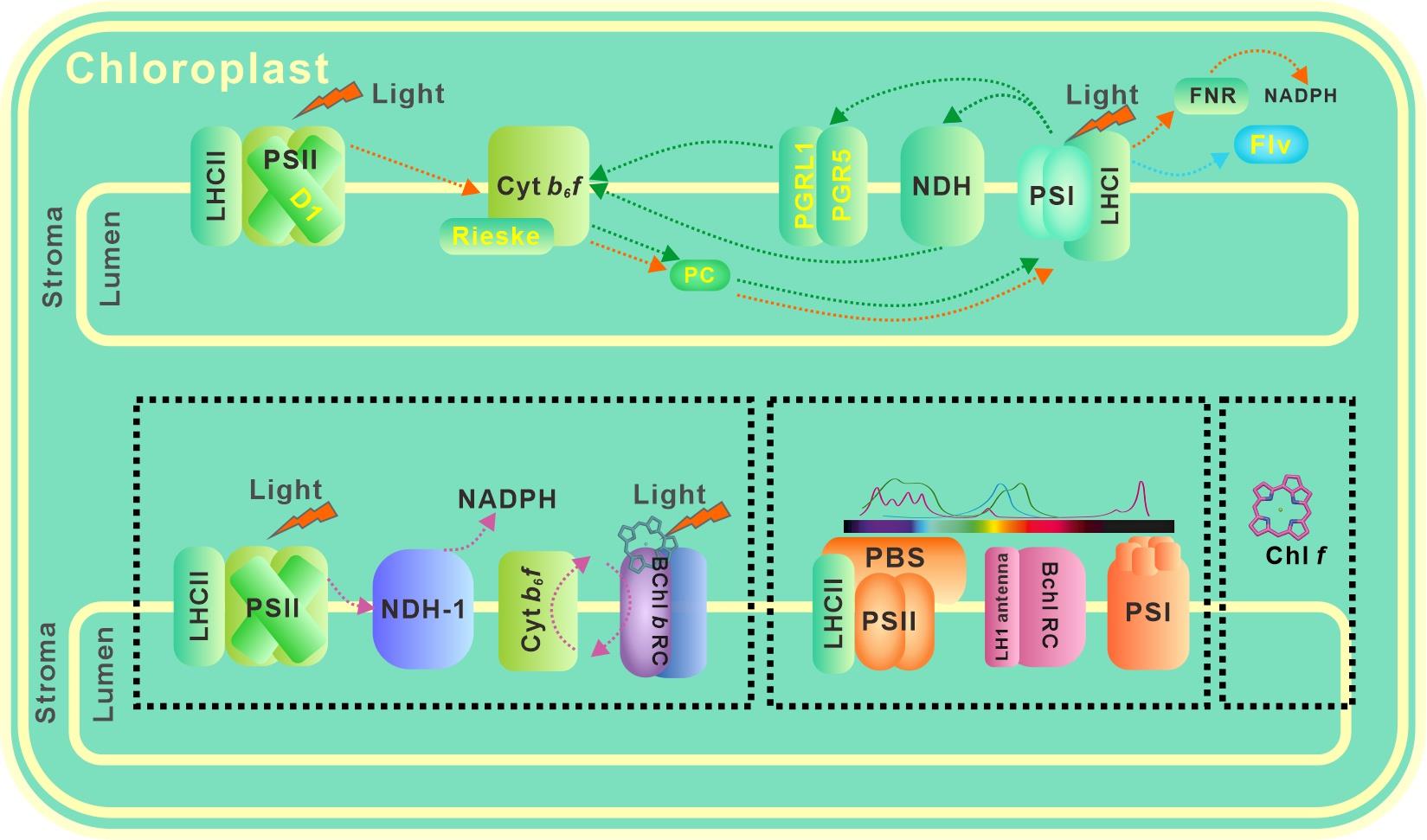
(上部分为在现有光合膜系统上开展的电子传递的改造,黄色字体标注目前已开展实验改造的靶点蛋白,橙色虚线箭头和绿色虚线箭头分别标注线式电子传递路径和环式电子传递路径。下部分黑色虚线框内为目前设计(待实验验证)的新型光能转化模型/方案,从左至右依次为Ort等设计的新型光反应中心和电子传递模型[
(The upper section illustrates modifications of electron transport on the existing photosynthetic membrane system, with target proteins that have been experimentally modified highlighted in yellow. Linear and cyclic electron transport are indicated by orange and green dashed arrows, respectively. The lower section, enclosed within a black dashed box, depicts novel light energy conversion models/projects currently under design (awaiting experimental validation). From left to right, these include: (1) the new photosynthetic reaction center and electron transfer model designed by Ort et al. [