|
||
|
Plant synthetic biology: new opportunities for large-scale culture of plant cells
Synthetic Biology Journal
2025, 6 (5):
1107-1125.
DOI: 10.12211/2096-8280.2024-095
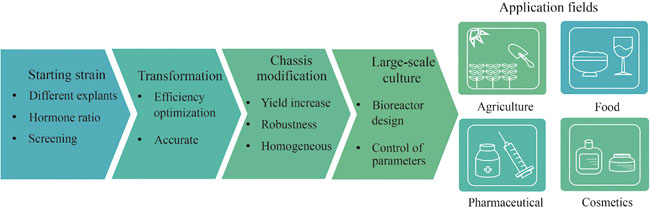
Plant Cell Culture (PCC) has emerged as a highly promising chassis for synthetic biology, offering a range of advantages such as short growth cycles, cost-effectiveness, absence of pathogenic risks, and abundant secondary metabolites. These features make PCC an attractive alternative for applications in medicine, food, and health. However, insufficient production efficiency due to difficulties in genetic transformation, complex regulatory networks, cell aggregation, and poor genetic stability remains a major obstacle that limits the commercialization of PCC. Synthetic biology, with its bottom-up engineering design approach, provides a powerful toolkit to address these challenges. By enabling the precise design and modification of native plant cells, synthetic biology offers innovative strategies to develop efficient and economically viable plant cell factories. In this paper, we first review the current status of PCC in synthesizing high-value compounds, particularly recombinant proteins and secondary metabolites. Recent advancements have demonstrated the potential of PCC to produce therapeutic proteins, vaccines, industrial enzymes and bioactive compounds such as alkaloids, flavonoids, and terpenoids. These successes underscore the versatility of PCC as a bioproduction platform. We then explore the role of synthetic biology in advancing PCC industrialization. Key developments include the creation of high-quality plant cell lines through genome editing tools like CRISPR/Cas9, enhancing genetic stability and metabolic efficiency. Additionally, synthetic biology has improved genetic transformation systems, overcoming a critical bottleneck in PCC. Enhanced expression systems, incorporating synthetic promoters and regulatory elements, have significantly boosted target compound yields. Furthermore, synthetic biology has expanded PCC applications by enabling the biosynthesis of heterologous compounds beyond their native metabolic pathways. Finally, we discuss future prospects, emphasizing the potential of synthetic biology to overcome current technical challenges. Emerging technologies including multi-omics integration, machine learning, and synthetic organelle development are anticipated to further enhance PCC’s scalability and efficiency. By addressing these challenges, synthetic biology will pave the way for large-scale plant cell cultivation, thereby facilitating its widespread adoption in industrial bioproduction. The convergence of PCC and synthetic biology holds immense potential for the sustainable, cost-effective, and scalable production of high-value compounds.
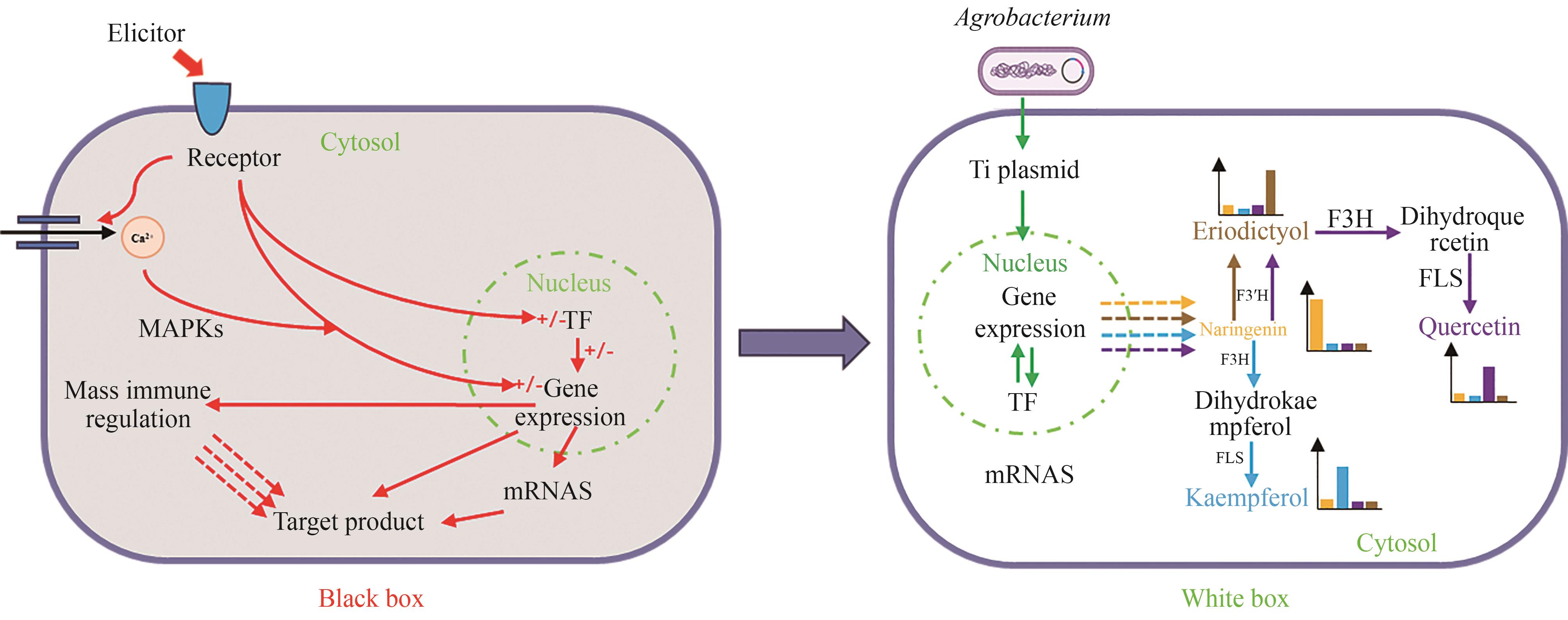
Fig. 2
Strategies for increasing plant cell yield from “Black box” to “White box”[
(In the “Black box”, the mechanism of the inducer to increase the yield of the target product has not been fully defined; in the “White box”, the yield of target products can be increased precisely with different gene circuits)
Extracts from the Article
合成生物学的工程化设计理念推动了植物代谢调控从“黑箱”到“白箱”精准调控的技术转型,比传统诱导子策略更加高效(图2)。
Other Images/Table from this Article
|