Synthetic biology-driven advances in artificial blood research
HUANG Ruping1, SUN Wenzhao1, JIN Juan1, LV Xueli2, SHENG Jingyi3, HUANG Bin1, GU Ning1,3,4
- 1. Jiangsu Key Laboratory for Biomedical Electromagnetic Precision Theranostics,School of Biomedical Engineering and Informatics,Nanjing Medical University,Nanjing 210029,Jiangsu,China
2. Jiangsu Key Laboratory for Cardiovascular Information and Health Engineering Medicine,Institute of Clinical Medicine,Affiliated Drum Tower Hospital,Medical School of Nanjing University,Nanjing 210008,Jiangsu,China
3. Jiangsu Key Laboratory for Biomaterials and Devices,School of Biological Science and Medical Engineering,Southeast University,Nanjing 210096,Jiangsu,China
4. Engineering Medicine Research Group,and Nanjing Research Center for Biomedical Electron Microscopy,Nanjing University,Nanjing 210093,Jiangsu,China
-
Received:2025-10-11Revised:2025-11-12Published:2025-11-17 -
Contact:HUANG Bin, GU Ning
合成生物学策略下的人工血液研究进展
黄如平1, 孙文钊1, 金娟1, 吕雪丽2, 盛静逸3, 黄斌1, 顾宁1,3,4
- 1. 南京医科大学生物医学工程与信息学院,江苏省生物医学电磁精准诊疗重点实验室,江苏 南京 210029
2. 南京大学医学院附属鼓楼医院临床医学研究院,江苏省血管信息与健康工程医学重点实验室,江苏 南京 210008
3. 东南大学生物科学与医学工程学院,江苏省生物材料与器件重点实验室,江苏 南京 210096
4. 南京大学医学院工程医学研究组,南京生物与医学电子显微技术研究中心,江苏 南京 210093
-
通讯作者:黄斌,顾宁 -
作者简介:黄如平 (2002—),女,硕士研究生。研究方向为细胞膜仿生材料的制备与应用。E-mail:18260480971@163.com黄斌 (1980—),男,博士,副教授,硕士生导师,中国化学会会员,研究方向为生物医学材料及诊疗应用。主持国家自然科学基金面上项目、国家重点研发计划项目子课题等纵向科研项目8项。E-mail:huangbinhb31@njmu.edu.cn顾宁 (1964—),男,博士,博士生导师,中国科学院院士,南京市血管信息与健康工程医学重点实验室主任,现任南京大学医学院教授。研究方向为分子功能材料薄膜、纳米加工以及纳米材料制备、表征及其在生物医(药)学领域中的应用,完成并正在承担多项国家级及部省级科研项目。E-mail:guning@nju.edu.cn -
基金资助:国家重点研发计划(2023YFF0713600);国家自然科学基金(62375138);江苏省重大科技基础设施预研项目

CLC Number:
Cite this article
HUANG Ruping, SUN Wenzhao, JIN Juan, LV Xueli, SHENG Jingyi, HUANG Bin, GU Ning. Synthetic biology-driven advances in artificial blood research[J]. Synthetic Biology Journal, DOI: 10.12211/2096-8280.2025-094.
黄如平, 孙文钊, 金娟, 吕雪丽, 盛静逸, 黄斌, 顾宁. 合成生物学策略下的人工血液研究进展[J]. 合成生物学, DOI: 10.12211/2096-8280.2025-094.
share this article
Add to citation manager EndNote|Ris|BibTeX
URL: https://synbioj.cip.com.cn/EN/10.12211/2096-8280.2025-094
| 名称 | 构成 | 功能 | 研究进展 |
|---|---|---|---|
| HemAssist [ | 2,3-二阿司匹林交联血红蛋白 | 急救输血扩容兼携氧 | 1999年未通过三期试验 |
| PolyHeme [ | 吡哆醛磷酸盐交联戊二醛血红蛋白 | 紧急氧供应 | 2009在美国完成III期试验,但没有获得FDA批准 |
| Hemolink [ | O-棉子糖交联血红蛋白 | 即时携氧与扩容支持 | 已通过三期临床;已停止研究 |
| Hemospan [ | 马来酰亚胺修饰的聚乙二醇化人血红蛋白 | 维持组织氧合 减少血管收缩 | 已通过三期临床;2015年停止开发 |
| Hemoximer [ | 共轭的磷酸化血红蛋白/交联的人血红蛋白 | 高效携氧与NO清除 适应低温和极端环境 | 三期临床于2011年终止 |
| | | | |
| OxyVita [ | 聚合牛血红蛋白 | 减少血管渗漏 | 临床试验进行中; 研究进行中 |
| Sanguinate [ | 聚乙二醇化羧基血红蛋白 | 用于镰状细胞病和缺血性疾病 | 未通过三期临床,研究进行中 |
| SynthoplateTM [ | 脂质体共价修饰三类功能肽:RGD肽(聚集)、vWF肽(黏附)、胶原肽(定位) | 可快速止血 | 在多动物模型中验证止血效果良好,正推进临床前安全性评估 |
Table 1 Clinical progress of artificial blood products
| 名称 | 构成 | 功能 | 研究进展 |
|---|---|---|---|
| HemAssist [ | 2,3-二阿司匹林交联血红蛋白 | 急救输血扩容兼携氧 | 1999年未通过三期试验 |
| PolyHeme [ | 吡哆醛磷酸盐交联戊二醛血红蛋白 | 紧急氧供应 | 2009在美国完成III期试验,但没有获得FDA批准 |
| Hemolink [ | O-棉子糖交联血红蛋白 | 即时携氧与扩容支持 | 已通过三期临床;已停止研究 |
| Hemospan [ | 马来酰亚胺修饰的聚乙二醇化人血红蛋白 | 维持组织氧合 减少血管收缩 | 已通过三期临床;2015年停止开发 |
| Hemoximer [ | 共轭的磷酸化血红蛋白/交联的人血红蛋白 | 高效携氧与NO清除 适应低温和极端环境 | 三期临床于2011年终止 |
| | | | |
| OxyVita [ | 聚合牛血红蛋白 | 减少血管渗漏 | 临床试验进行中; 研究进行中 |
| Sanguinate [ | 聚乙二醇化羧基血红蛋白 | 用于镰状细胞病和缺血性疾病 | 未通过三期临床,研究进行中 |
| SynthoplateTM [ | 脂质体共价修饰三类功能肽:RGD肽(聚集)、vWF肽(黏附)、胶原肽(定位) | 可快速止血 | 在多动物模型中验证止血效果良好,正推进临床前安全性评估 |
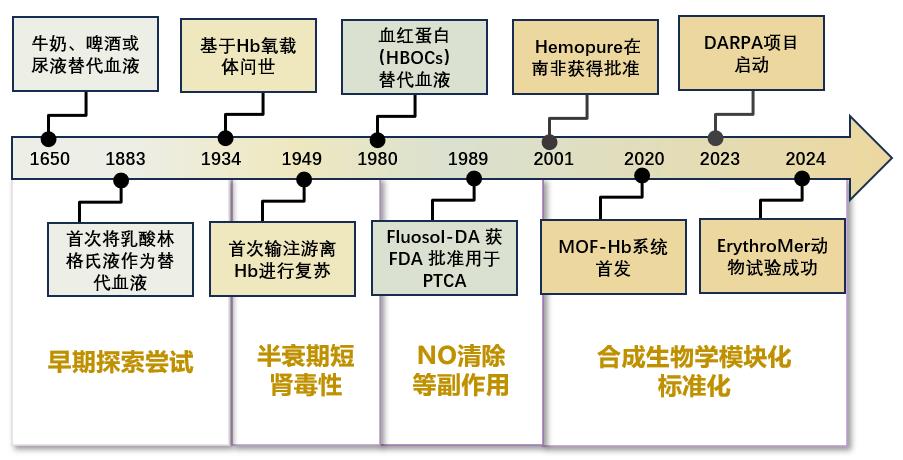
Fig.1 The development history of artificial blood substitutes
| 工具类型 | 核心原理 | 优势 | 局限性 | 参考文献 |
|---|---|---|---|---|
| 基因编辑与调控系统 | 利用 Cas 核酸酶对目标 DNA 精确切割与修复,实现基因定点插入或敲除 | 高精度、可编程、可实现多基因并行调控 | 潜在脱靶风险、伦理限制 | [ |
| 底盘细胞与代谢工程 | 通过基因组与代谢优化,重构宿主的生产能力与安全性 | 支持多模块组合与迭代优化,实现高效生物合成 | 代谢负担大,调控复杂 | [ |
| 无细胞与人工系统构建 | 通过细胞提取或纯化组分体系在体外重建转录翻译与代谢反应,实现蛋白合成与人工细胞构建 | 高可控性、模块化、支持多回路测试与人工细胞构建 | 能量维持时间短、体系成本高、缺乏自我复制与长期稳态 | [ |
| AI与自动化DBTL循环 | 将机器学习嵌入DBTL循环,实现实验预测与迭代优化 | 加速设计迭代、提升预测精度、多变量优化,减少成本 | 需大规模数据支撑 | [ |
Table 2 Main tools of synthetic biology
| 工具类型 | 核心原理 | 优势 | 局限性 | 参考文献 |
|---|---|---|---|---|
| 基因编辑与调控系统 | 利用 Cas 核酸酶对目标 DNA 精确切割与修复,实现基因定点插入或敲除 | 高精度、可编程、可实现多基因并行调控 | 潜在脱靶风险、伦理限制 | [ |
| 底盘细胞与代谢工程 | 通过基因组与代谢优化,重构宿主的生产能力与安全性 | 支持多模块组合与迭代优化,实现高效生物合成 | 代谢负担大,调控复杂 | [ |
| 无细胞与人工系统构建 | 通过细胞提取或纯化组分体系在体外重建转录翻译与代谢反应,实现蛋白合成与人工细胞构建 | 高可控性、模块化、支持多回路测试与人工细胞构建 | 能量维持时间短、体系成本高、缺乏自我复制与长期稳态 | [ |
| AI与自动化DBTL循环 | 将机器学习嵌入DBTL循环,实现实验预测与迭代优化 | 加速设计迭代、提升预测精度、多变量优化,减少成本 | 需大规模数据支撑 | [ |
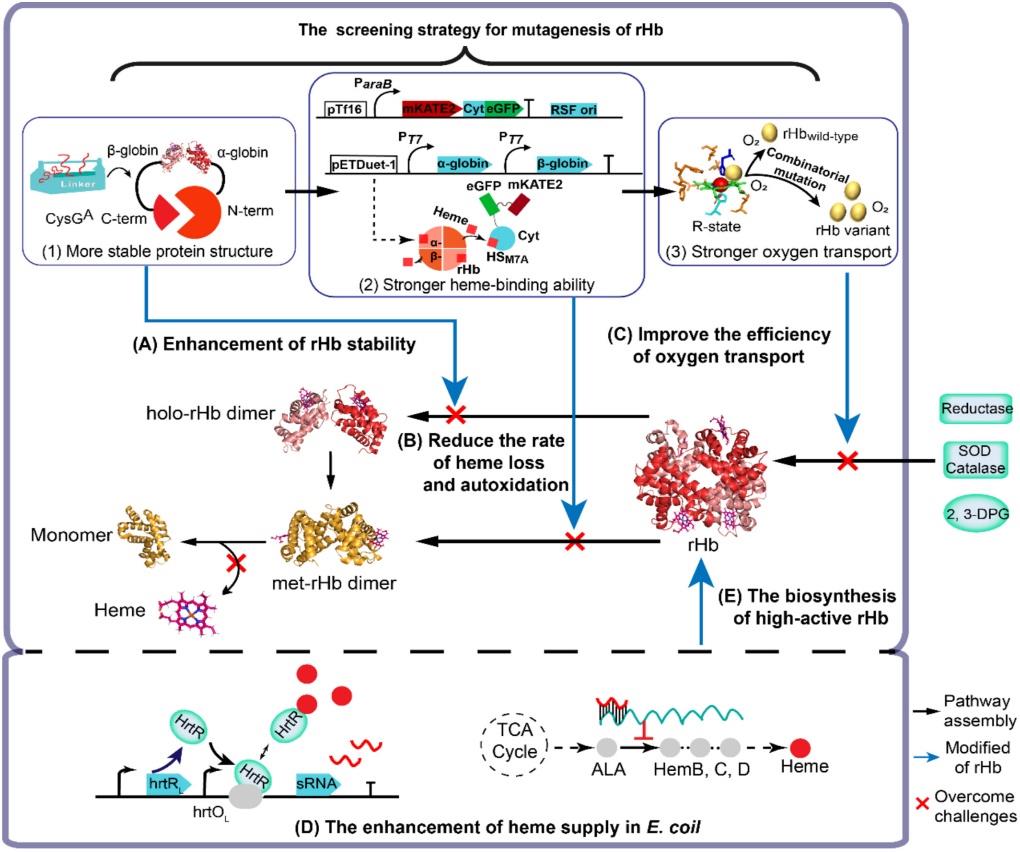
Fig. 2 Engineering strategies for synthesizing robust, high-active rHb
| [1] | JAHR J S , GUINN N R , LOWERY D R , et al . Blood Substitutes and Oxygen Therapeutics: A Review [J]. Anesthesia & Analgesia, 2021, 132(1): 119-129. |
| [2] | MOHANTO N , PARK Y J , JEE J P . Current perspectives of artificial oxygen carriers as red blood cell substitutes: a review of old to cutting-edge technologies using in vitro and in vivo assessments [J]. Journal of Pharmaceutical Investigation, 2023, 53(1): 153-190. |
| [3] | NAICKER K , RANCHOD D , MSIZA K , et al . COVID-19 impact on blood donation and blood product use in Mangaung Metropolitan Municipality [J]. South African Family Practice (2004), 2025, 67(1): e1-e9. |
| [4] | SHARMA R , KASHYAP M , ZAYED H , et al . Artificial blood—hope and the challenges to combat tumor hypoxia for anti-cancer therapy [J]. Medical & Biological Engineering & Computing, 2025, 63(4): 933-957. |
| [5] | CAMERON D E , BASHOR C J , COLLINS J J . A brief history of synthetic biology [J]. Nature Reviews Microbiology, 2014, 12(5): 381-390. |
| [6] | ZHUANG J , YING M , SPIEKERMANN K , et al . Biomimetic Nanoemulsions for Oxygen Delivery In Vivo [J]. Advanced Materials, 2018, 30(49): e1804693. |
| [7] | WAETERSCHOOT J , GOSSELE W , LEMEZ S , et al . Artificial cells for in vivo biomedical applications through red blood cell biomimicry [J]. Nature Communications, 2024, 15(1): 2504. |
| [8] | NATANSON C , KERN S J , LURIE P , et al . Cell-free hemoglobin-based blood substitutes and risk of myocardial infarction and death: a meta-analysis [J]. Jama, 2008, 299(19): 2304-2312. |
| [9] | WANG S , JUN Y, JIE Y, et al . Advancement of platelet-inspired nanomedicine[J]. Platelets, 2018, 29(7): 690-694. |
| [10] | ITO Y , NAKAMURA S , SUGIMOTO N , et al . Turbulence Activates Platelet Biogenesis to Enable Clinical Scale Ex Vivo Production [J]. Cell, 2018, 174(3):636-648.e618. |
| [11] | 畅正阳, 李明, 高建朋, 等 . 人工胶体血浆代用品的分类及其临床研究 [J].中国输血杂志, 2025, 38(01): 136-141. |
| CHANG Z. , Li M. , Gao J. , et al .. Classification and clinical research of artificial colloidal plasma substitutes. Chinese Journal of Blood Transfusion [J], (2025), 38(1), 136–141. | |
| [12] | 低血容量休克复苏指南( 2007) [J]. 中国实用外科杂志, 2007, (08): 581-587. |
| Low-volume shock resuscitation guidelines (2007) [J]. Chinese Journal of Practical Surgery, 2007, (08): 581–587. | |
| [13] | WOODCOCK T E , MICHEL C C . Advances in the Starling Principle and Microvascular Fluid Exchange; Consequences and Implications for Fluid Therapy [J]. Frontiers in Veterinary Science, 2021, 8: 623671. |
| [14] | SPAHN D R , KOCIAN R . Artificial O2 carriers: status in 2005 [J]. Current pharmaceutical design, 2005, 11(31): 4099-4114. |
| [15] | JAHR J S , PolyHeme VARMA N. . Northfield Laboratories [J]. IDrugs: the investigational drugs journal, 2004, 7(5): 478-482. |
| [16] | LEYTIN V , MAZER D , MODY M , et al . Hemolink™, an o‐raffinose cross‐linked haemoglobin‐based oxygen carrier, does not affect activation and function of human platelets in whole blood in vitro [J]. British journal of haematology, 2003, 120(3): 535-541. |
| [17] | SMANI Y . Hemospan: a hemoglobin-based oxygen carrier for potential use as a blood substitute and for the potential treatment of critical limb ischemia [J]. Curr Current Opinion in Investigational Drugs, 2008, 9(9): 1009-1019. |
| [18] | CHEN L , YANG Z , LIU H . Hemoglobin-based oxygen carriers: where are we now in 2023? [J]. Medicina, 2023, 59(2): 396. |
| [19] | HUGHES JR G S , YANCEY E P , ALBRECHT R , et al . Hemoglobin‐based oxygen carrier preserves submaximal exercise capacity in humans [J]. Clinical Pharmacology & Therapeutics, 1995, 58(4): 434-443. |
| [20] | HARRINGTON J P , WOLLOCKO H . Pre-clinical studies using OxyVita hemoglobin, a zero-linked polymeric hemoglobin: a review [J]. Journal of Artificial Organs, 2010, 13(4): 183-188. |
| [21] | ABUCHOWSKI A . SANGUINATE (PEGylated Carboxyhemoglobin Bovine): Mechanism of Action and Clinical Update [J]. Artif Organs, 2017, 41(4): 346-350. |
| [22] | SHUKLA M , SEKHON U D , BETAPUDI V , et al . In vitro characterization of SynthoPlate™ (synthetic platelet) technology and its in vivo evaluation in severely thrombocytopenic mice [J]. Journal of Thrombosis and Haemostasis, 2017, 15(2): 375-387. |
| [23] | SQUIRES J E . Artificial blood [J]. Science, 2002, 295(5557): 1002-1005. |
| [24] | HALDAR R , GUPTA D , CHITRANSHI S , et al . Artificial Blood: A Futuristic Dimension of Modern Day Transfusion Sciences [J]. Cardiovascular & Hematological Agents in Medicinal Chemistry, 2019, 17(1): 11-16. |
| [25] | JAHR J S . Blood substitutes: Basic science, translational studies and clinical trials [J]. Frontiers in Medical Technology, 2022, 4: 989829. |
| [26] | AMBERSON W R , JENNINGS J J , RHODE C M . Clinical experience with hemoglobin-saline solutions [J]. Journal of Applied Physiology, 1949, 1(7): 469-489. |
| [27] | KHAN F , SINGH K , FRIEDMAN M T . Artificial blood: the history and current perspectives of blood substitutes [J]. Discoveries, 2020, 8(1): e104. |
| [28] | GUPTA A SEN . Bio-inspired nanomedicine strategies for artificial blood components [J]. Wiley Interdisciplinary Reviews: Nanomedicine and Nanobiotechnology, 2017, 9(6): e1457. |
| [29] | LOWE K C . Fluosol®: The first commercial injectable perfluorocarbon oxygen carrier [J]. Blood substitutes, 2006: 276-287. |
| [30] | GUPTA A SEN . Hemoglobin-based Oxygen Carriers: Current State-of-the-art and Novel Molecules [J]. Shock, 2019, 52(1S ): 70-83. |
| [31] | LIU X , JANSMAN M M , HOSTA-RIGAU L . Haemoglobin-loaded metal organic framework-based nanoparticles camouflaged with a red blood cell membrane as potential oxygen delivery systems [J]. Biomaterials Science, 2020, 8(21): 5859-5873. |
| [32] | NIELSEN J , KEASLING J D . Engineering Cellular Metabolism [J]. Cell, 2016, 164(6): 1185-1197. |
| [33] | ZHANG X E , LIU C , DAI J , et al . Enabling technology and core theory of synthetic biology [J]. Science China Life Sciences, 2023, 66(8): 1742-1785. |
| [34] | WANG H H , ISAACS F J , CARR P A , et al . Programming cells by multiplex genome engineering and accelerated evolution [J]. Nature, 2009, 460(7257): 894-898. |
| [35] | GONZALES D T , ZECHNER C , TANG T Y D . Building synthetic multicellular systems using bottom–up approaches [J]. Current Opinion in Systems Biology, 2020, 24: 56-63. |
| [36] | NOIREAUX V , LIBCHABER A . A vesicle bioreactor as a step toward an artificial cell assembly [J]. Proceedings of the National Academy of Sciences of the United States of America, 2004, 101(51): 17669-17674. |
| [37] | CHEN H , WANG Y , WANG W , et al . High-yield porphyrin production through metabolic engineering and biocatalysis [J]. Nature biotechnology, 2024: 1-11. |
| [38] | YUE K , CHEN J , LI Y , et al . Advancing synthetic biology through cell-free protein synthesis [J]. Computational and Structural Biotechnology Journal, 2023, 21: 2899-2908. |
| [39] | RICE A J , SWORD T T , CHENGAN K , et al . Cell-free synthetic biology for natural product biosynthesis and discovery [J]. Chemical Society Reviews, 2025, 54(9): 4314-4352. |
| [40] | RAI K, WANG Y , O'CONNELL R W , et al . Using machine learning to enhance and accelerate synthetic biology [J]. Current Opinion in Biomedical Engineering, 2024, 31: 100553. |
| [41] | COOPER C E , SIMONS M , DYSON A , et al . Taming hemoglobin chemistry—a new hemoglobin-based oxygen carrier engineered with both decreased rates of nitric oxide scavenging and lipid oxidation [J]. Experimental & Molecular Medicine, 2024, 56(10): 2260-2270. |
| [42] | ADAMES N R , GALLEGOS J E , PECCOUD J . Yeast genetic interaction screens in the age of CRISPR/Cas [J]. Current Genetics, 2019, 65(2): 307-327. |
| [43] | GASIUNAS G , BARRANGOU R , HORVATH P , et al . Cas9-crRNA ribonucleoprotein complex mediates specific DNA cleavage for adaptive immunity in bacteria [J]. Proceedings of the National Academy of Sciences of the United States of America, 2012, 109(39): E2579-2586. |
| [44] | YANG Y , GENG B , SONG H , et al . [Progress and perspective on development of non-model industrial bacteria as chassis cells for biochemical production in the synthetic biology era] [J]. Sheng Wu Gong Cheng Xue Bao, 2021, 37(3): 874-910. |
| [45] | RICHARDSON S M , MITCHELL L A , STRACQUADANIO G , et al . Design of a synthetic yeast genome [J]. Science, 2017, 355(6329): 1040-1044. |
| [46] | IWADATE Y , HONDA H , SATO H , et al . Oxidative stress sensitivity of engineered Escherichia coli cells with a reduced genome [J]. FEMS Microbiology Letters, 2011, 322(1): 25-33. |
| [47] | REUß D R , ALTENBUCHNER J , MäDER U , et al . Large-scale reduction of the Bacillus subtilis genome: consequences for the transcriptional network, resource allocation, and metabolism [J]. Genome Research, 2017, 27(2): 289-299. |
| [48] | UNTHAN S , BAUMGART M , RADEK A , et al . Chassis organism from Corynebacterium glutamicum--a top-down approach to identify and delete irrelevant gene clusters [J]. Biotechnology Journal, 2015, 10(2): 290-301. |
| [49] | SAGT C M . Systems metabolic engineering in an industrial setting [J]. Appl Microbiol Biotechnol, 2013, 97(6): 2319-2326. |
| [50] | 郭意瑶, 黄曙惠, 刘晚秋, 等 . 无细胞合成生物学在生物医学领域的应用研究进展[J].生命科学,2025,37(08):1031-1040. |
| GUO Y Y , Huang S H , Liu W Q , et al . Research progress on the applicationof cell-free synthetic biology in the biomedical field [J]. Life Sciences, 2025, 37(08): 1031-1040. | |
| [51] | 王晟, 王泽琛, 陈威华, 等 . 基于人工智能和计算生物学的合成生物学元件设计[J].合成生物学, 2023, 4(03): 422-443. |
| WANG S , Wang Z C , Chen W H , et al . Design of synthetic biology components based on artificial intelligence and computational biology [J]. Synthetic Biology, 2023, 4(03): 422-443. | |
| [52] | CHUAI G , MA H , YAN J , et al . DeepCRISPR: optimized CRISPR guide RNA design by deep learning [J]. Genome Biology, 2018, 19(1): 80. |
| [53] | LIU F , ZHOU J , LI J , et al . Precise Engineering and Efficient Biosynthesis of Robust and High-Activity Human Haemoglobin for Artificial Oxygen Carriers [J]. Microbial Biotechnology, 2025, 18(3): e70128. |
| [54] | YANG S , GUO Z , SUN J , et al . Recent advances in microbial synthesis of free heme [J]. Applied Microbiology and Biotechnology,2024, 108(1): 68. |
| [55] | XUE J , ZHOU J , LI J , et al . Systematic engineering of Saccharomyces cerevisiae for efficient synthesis of hemoglobins and myoglobins [J]. Bioresource Technology, 2023, 370: 128556. |
| [56] | GE J , WANG X , BAI Y , et al . Engineering Escherichia coli for efficient assembly of heme proteins [J]. Microbial Cell Factories, 2023, 22(1): 59. |
| [57] | LI D , YADAV A , ZHOU H , et al . Advances and Applications of Metal‐Organic Frameworks (MOFs) in Emerging Technologies: A Comprehensive Review [J]. Global Challenges, 2024, 8(2). 2300244. |
| [58] | WANG J , GUO Y , JIAO Z , et al . Generation of micro-nano bubbles by magneto induced internal heat for protecting cells from intermittent hypoxic damage [J]. Colloids and Surfaces A: Physicochemical and Engineering Aspects, 2022, 655: 130289. |
| [59] | ZARà M , CANOBBIO I , VISCONTE C , et al . Molecular mechanisms of platelet activation and aggregation induced by breast cancer cells [J]. Cell Signal, 2018, 48: 45-53. |
| [60] | ISLAM F , JAVDAN S B , LEWIS M R , et al . Programming megakaryocytes to produce engineered platelets for delivering non-native proteins [J]. Communications Biology, 2025, 8(1): 638. |
| [61] | KRISCH L , BRACHTL G , HOCHMANN S , et al . Improving Human Induced Pluripotent Stem Cell-Derived Megakaryocyte Differentiation and Platelet Production [J]. International Journal of Molecular Sciences, 2021, 22(15): 8824 |
| [62] | CHEN C , WANG N , ZHANG X , et al . Highly efficient generation of mature megakaryocytes and functional platelets from human embryonic stem cells [J]. Stem Cell Research & Therapy, 2024, 15(1): 454. |
| [63] | SIMEONE P , LIANI R , TRIPALDI R , et al . Reduced platelet glycoprotein Ibα shedding accelerates thrombopoiesis and COX-1 recovery: implications for aspirin dosing regimen [J]. Haematologica, 2023, 108(4): 1141-1157. |
| [64] | HUANG B , LI L , YAO S , et al . Enhanced regenerative and developmental potential of embryonal and stem cell-derived platelets compared to adult platelets [J]. Cell Reports Medicine, 2025, 6(8): 102297. |
| [65] | KHORANA A A , FRANCIS C W , MENZIES K E , et al . Plasma tissue factor may be predictive of venous thromboembolism in pancreatic cancer [J]. Journal of Thrombosis and Haemostasis, 2008, 6(11): 1983-1985. |
| [66] | LABELLE M , BEGUM S , HYNES R O . Platelets guide the formation of early metastatic niches [J]. Proceedings of the National Academy of Sciences of the United States of America, 2014, 111(30): E3053-3061. |
| [67] | JIANPEI X U , QUNWEI X U , XIAOQI W , et al . Advances in biomimetic drug delivery systems based on platelet and platelet membrane [J]. Journal of China Pharmaceutical University, 2018, 49(6): 653-659. |
| [68] | LI S , LU Z , WU S , et al . The dynamic role of platelets in cancer progression and their therapeutic implications [J]. Nature Reviews Cancer, 2024, 24(1): 72-87. |
| [69] | LAWRENCE M , MUELLER A , GHEVAERT C . Using genome editing to engineer universal platelets [J]. Emerging Topics in Life Sciences, 2019, 3(3): 301-311. |
| [70] | MODERY-PAWLOWSKI C L , TIAN L L , PAN V , et al . Approaches to synthetic platelet analogs [J]. Biomaterials, 2013, 34(2): 526-541. |
| [71] | SARKHEL S , JAISWAL A . Emerging Frontiers in In Situ Forming Hydrogels for Enhanced Hemostasis and Accelerated Wound Healing [J]. ACS Applied Materials & Interfaces, 2024, 16(45): 61503-61529. |
| [72] | SHUAI Y , QIAN Y , ZHENG M , et al . Injectable platelet-mimicking silk protein-peptide conjugate microspheres for hemostasis modulation and targeted treatment of internal bleeding [J]. Journal of Nanobiotechnology, 2025, 23(1): 128. |
| [73] | SEKHON U D S , SWINGLE K , GIRISH A , et al . Platelet-mimicking procoagulant nanoparticles augment hemostasis in animal models of bleeding [J]. Science Translational Medicine, 2022, 14(629): eabb8975. |
| [74] | NELLENBACH K , MIHALKO E , NANDI S , et al . Ultrasoft platelet-like particles stop bleeding in rodent and porcine models of trauma [J]. Science Translational Medicine, 2024, 16(742): eadi4490. |
| [75] | LI M , CHENG X , CHEN Z , et al . Platelet magnetic nanocarriers as MRI sensors to delineate vascular injury network and targeted pre-protection in ischemic stroke [J]. Science China Materials, 2023, 66(2): 827-835. |
| [76] | YANHANG G , JUNQI N . The development and application of genetically engineered human serum albumin [J]. Journal of Clinical Hepatobiliary Diseases, 2025, 41(3): 415-419. |
| [77] | NIU J , GAO Y , WANG G , et al . Rice-derived recombinant human serum albumin as an alternative to human plasma for patients with decompensated liver cirrhosis: a randomised, double-blind, positive-controlled and non-inferiority trial [J]. Gut, 2025, 74(9): 1476-1485. |
| [78] | CHEN Z , HE Y , SHI B , et al . Human serum albumin from recombinant DNA technology: challenges and strategies [J]. Biochim Biophys Acta, 2013, 1830(12): 5515-5525. |
| [79] | BUCHACHER A , CURLING J M . Chapter 42 - Current Manufacturing of Human Plasma Immunoglobulin G [M]//Jagschies G, Lindskog E, Łącki K, et al. Biopharmaceutical Processing. Elsevier. 2018: 857-876. |
| [80] | ZHANG J , ZHAO Y , CAO Y , et al . Synthetic sRNA-Based Engineering of Escherichia coli for Enhanced Production of Full-Length Immunoglobulin G [J]. Biotechnology Journal, 2020, 15(5): e1900363. |
| [81] | SHEN G , GAO M , CAO Q , et al . The Molecular Basis of FIX Deficiency in Hemophilia B [J]. International Journal of Molecular Sciences,2022, 23(5): 2762. |
| [82] | 宋政 .重组人凝血因子Ⅸ在鸡输卵管中的特异性表达 [D]; 扬州大学, 2014. |
| SONG Z . Specific expression of recombinant human coagulation factor Ⅸ in chicken oviduct [D]. Yangzhou University, 2014. | |
| [83] | ABRAHAM M K , JOST E , HOHMANN J D , et al . A Recombinant Fusion Construct between Human Serum Albumin and NTPDase CD39 Allows Anti-Inflammatory and Anti-Thrombotic Coating of Medical Devices [J]. Pharmaceutics,2021, 13(9): 1390. |
| [84] | NILSEN J , AAEN K H , BENJAKUL S , et al . Enhanced plasma half-life and efficacy of engineered human albumin-fused GLP-1 despite enzymatic cleavageof its C-terminal end [J]. Communications Biology, 2025, 8(1): 1-17. |
| [85] | PAN M , SUN Z , ZHANG Y , et al . Aggregation‐Disruption‐Induced Multi‐ScaleMediating Strategy for Anticoagulation in Blood‐Contacting Devices [J]. Advanced Materials, 2024, 36(47):e2412701. |
| [86] | SANTAGOSTINO E , MARTINOWITZ U , LISSITCHKOV T , et al . Long-actingrecombinant coagulation factor IX albumin fusion protein (rIX-FP) in hemophilia B: results of a phase 3 trial [J]. Blood, 2016, 127(14): 1761–1769. |
| [87] | CHEN X , LEE H F , ZARO J L , et al . Effects of receptor binding on plasma half-life of bifunctional transferrin fusion proteins [J]. Molecular Pharmaceutics, 2011, 8(2): 457-465. |
| [88] | PAN D , ROGERS S , MISRA S , et al . Erythromer (EM), a nanoscale bio-synthetic artificial red cell: proof of concept and in vivo efficacy results [J]. Blood, 2016, 128(22): 1027. |
| [89] | HICKMAN D A , PAWLOWSKI C L , SHEVITZ A , et al . Intravenous synthetic platelet (SynthoPlate) nanoconstructs reduce bleeding and improve 'golden hour'survival in a porcine model of traumatic arterial hemorrhage [J]. Scientific Reports, 2018, 8(1): 1-14. |
| [90] | WU M , FENG K , LI Q , et al . Glutaraldehyde-polymerized hemoglobin and tempol (PolyHb-tempol) has superoxide dismutase activity that can attenuate oxidative stress on endothelial cells induced by superoxide anion [J]. Artificial Cells, Nanomedicine, and Biotechnology, 2018, 46(1): 47-55. |
| [91] | 杨代常 . 利用水稻胚乳细胞作为生物反应器生产重组人血清白蛋白[Z]. |
| CN .2007 | |
| YANG D C . Production of recombinant human serum albumin using rice endosperm cells as a bioreactor [Z]. CN, 2007. | |
| [92] | TORRES L , KRüGER A , CSIBRA E , et al . Synthetic biology approaches to biological containment: pre-emptively tackling potential risks [J]. Essays in Biochemistry, 2016, 60(4): 393-410. |
| [93] | OU Y, GUO S . Safety risks and ethical governance of biomedical applications of synthetic biology [J]. Frontiers in Bioengineering and Biotechnology, 2023, 11: 1292029. |
| [94] | WANG G , KONG Q , WANG D , et al . Ethical and social insights into synthetic biology: predicting research fronts in the post-COVID-19 era [J]. Frontiers in Bioengineering and Biotechnology, 2023, 11: 1085797. |
| [95] | 曾小美, 朱泽熙, 翁俊 . 合成生物学产品商业化安全监管思考 [J]. 生物工程学报, 2024, 40(3): 758-772. |
| ZENG X M , Zhu Z X , Weng J . Considerations on safety supervision of synthetic biology product commercialization [J]. Chinese Journal of Biotechnology, 2024, 40(3): 758-772. | |
| [96] | 马诗雯, 王国豫 .如何应对合成生物学的不确定性--«合成生物学的监管:生物砖,生物朋克与生物企业»评介 [J]. 2021, (2019-3): 124-136. |
| MA S W , Wang G Y . How to deal with the uncertainty of synthetic biology: a review of Regulating Synthetic Biology: BioBricks, BioPunks and BioEntrepreneurs [J]. Science and Technology Review, 2021, (2019-3): 124-136. | |
| [97] | MATSUHIRA T , SAKAI H . Artificial oxygen carriers, from nanometer- to micrometer-sized particles, made of hemoglobin composites substituting for red blood cells [J]. Particuology, 2022, 64: 43-55. |
| [98] | BUTCHER J K V , KRISHNA R , MITRA R , et al . De novo Design of All-atom Biomolecular Interactions with RFdiffusion3 [J]. bioRxiv: The Preprint Server for Biology, 2025. |
| [99] | 潘陈梦笑, 刘天罡, 刘然 . 构建链霉菌无细胞平台挖掘套索肽类天然产物 [J].微生物学报, 2022, 62(05): 1754-1768. |
| PAN C . M. X., LIU T. G. Construction of a Streptomyces-based cell-free platform for the exploration of lasso peptide natural products. Acta Microbiologica Sinica, 2022, 62(05): 1754-1768. | |
| [100] | 顾宁, 盛静逸, 王强, 等 . 心血管驱动的多器官关联研究模型:研究进展与科学问题 [J].科学通报, 2025, 70(26): 4551-4559. |
| GU N , Sheng J Y , Wang Q , et al . Cardiovascular-driven multi-organ interactionresearch models: progress and scientific issues [J]. Chinese Science Bulletin, 2025, (26):4551-4559. |
| [1] | SONG Kainan, ZHANG Liwen, WANG Chao, TIAN Pingfang, LI Guangyue, PAN Guohui, XU Yuquan. Advances in small-molecule biopesticides and their biosynthesis [J]. Synthetic Biology Journal, 2025, 6(5): 1203-1223. |
| [2] | YU Wenwen, LV Xueqin, LI Zhaofeng, LIU Long. Plant synthetic biology and bioproduction of human milk oligosaccharides [J]. Synthetic Biology Journal, 2025, 6(5): 992-997. |
| [3] | YAN Zhaotao, ZHOU Pengfei, WANG Yangzhong, ZHANG Xin, XIE Wenyan, TIAN Chenfei, WANG Yong. Plant synthetic biology: new opportunities for large-scale culture of plant cells [J]. Synthetic Biology Journal, 2025, 6(5): 1107-1125. |
| [4] | SUN Yang, CHEN Lichao, SHI Yanyun, WANG Ke, LV Dandan, XU Xiumei, ZHANG Lixin. Strategies and prospects of synthetic biology in crop photosynthesis [J]. Synthetic Biology Journal, 2025, 6(5): 1025-1040. |
| [5] | ZHAO Xinyu, SHENG Qi, LIU Kaifang, LIU Jia, LIU Liming. Construction of microbial cell factories for aspartate-family feed amino acids [J]. Synthetic Biology Journal, 2025, 6(5): 1184-1202. |
| [6] | HE Yangyu, YANG Kai, WANG Weilin, HUANG Qian, QIU Ziying, SONG Tao, HE Liushang, YAO Jinxin, GAN Lu, HE Yuchi. Design and practice of plant synthetic biology theme in the International Genetically Engineered Machine Competition [J]. Synthetic Biology Journal, 2025, 6(5): 1243-1254. |
| [7] | ZHANG Xuebo, ZHU Chengshu, CHEN Ruiyun, JIN Qingzi, LIU Xiao, XIONG Yan, CHEN Daming. Policy planning and industrial development of agricultural synthetic biology [J]. Synthetic Biology Journal, 2025, 6(5): 1224-1242. |
| [8] | LIU Jie, GAO Yu, MA Yongshuo, SHANG Yi. Progress and challenges of synthetic biology in agriculture [J]. Synthetic Biology Journal, 2025, 6(5): 998-1024. |
| [9] | ZHENG Lei, ZHENG Qiteng, ZHANG Tianjiao, DUAN Kun, ZHANG Ruifu. Engineering rhizosphere synthetic microbial communities to enhance crop nutrient use efficiency [J]. Synthetic Biology Journal, 2025, 6(5): 1058-1071. |
| [10] | LI Chao, ZHANG Huan, YANG Jun, WANG Ertao. Research advances in nitrogen fixation synthetic biology [J]. Synthetic Biology Journal, 2025, 6(5): 1041-1057. |
| [11] | WEI Jiaxiu, JI Peiyun, JIE Qingyu, HUANG Qiuyan, YE Hao, DAI Junbiao. Construction and application of plant artificial chromosomes [J]. Synthetic Biology Journal, 2025, 6(5): 1093-1106. |
| [12] | FANG Xinyi, SUN Lichao, HUO Yixin, WANG Ying, YUE Haitao. Trends and challenges in microbial synthesis of higher alcohols [J]. Synthetic Biology Journal, 2025, 6(4): 873-898. |
| [13] | WU Xiaoyan, SONG Qi, XU Rui, DING Chenjun, CHEN Fang, GUO Qing, ZHANG Bo. A comparative analysis of global research and development competition in synthetic biology [J]. Synthetic Biology Journal, 2025, 6(4): 940-955. |
| [14] | ZHANG Jiankang, WANG Wenjun, GUO Hongju, BAI Beichen, ZHANG Yafei, YUAN Zheng, LI Yanhui, LI Hang. Development and application of a high-throughput microbial clone picking workstation based on machine vision [J]. Synthetic Biology Journal, 2025, 6(4): 956-971. |
| [15] | LI Quanfei, CHEN Qian, LIU Hao, HE Kundong, PAN Liang, LEI Peng, GU Yi’an, SUN Liang, LI Sha, QIU Yibin, WANG Rui, XU Hong. Synthetic biology and applications of high-adhesion protein materials [J]. Synthetic Biology Journal, 2025, 6(4): 806-828. |
| Viewed | ||||||
|
Full text |
|
|||||
|
Abstract |
|
|||||